Chiller Tripped & Alarm On? Don’t Reset Immediately — Check These First!
We often get asked by customers: “My chiller was running fine, why did it suddenly shut down and trigger an alarm?” In most cases, an alarm shutdown does not mean the unit has failed. Instead, the electronic control system hits the brakes proactively as a protective measure. This prevents minor issues from escalating into catastrophic damage such as burnt compressors or water pumps. This article covers common alarm triggers, alarm types and troubleshooting guidance. Feel free to leave a comment if you have questions or want to learn more about chillers.
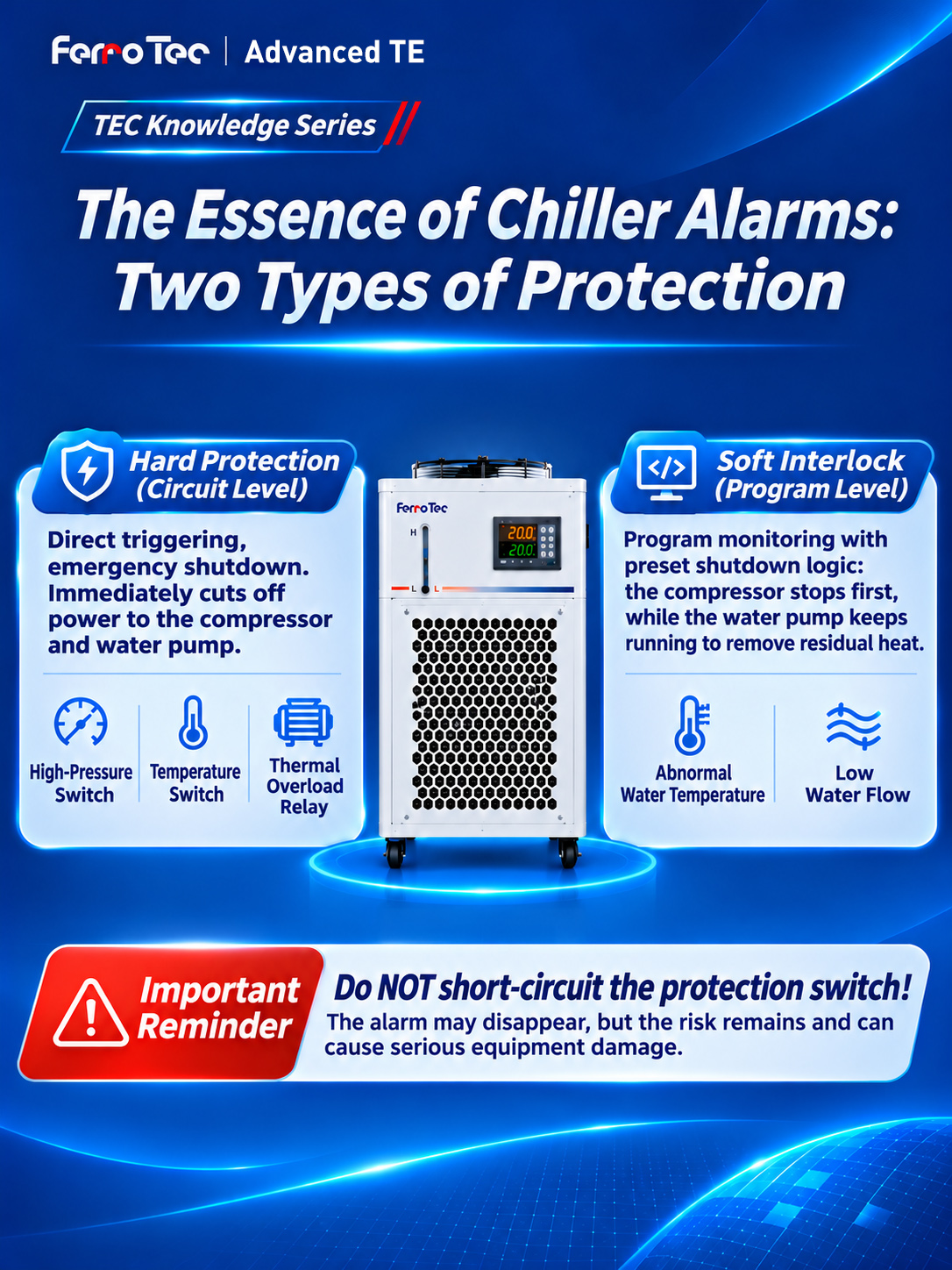
First, understand the core logic of chiller protection: there are two tiers of electronic safeguards.
The first tier is hardwired protection, including high-pressure switch trips, temperature limit switch activation and thermal relay overload trips. Once triggered, it indicates an urgent hazard. Power supply to the compressor and water pump is cut off immediately, independent of the control program.
The second tier is software interlock within the control logic, such as abnormal water temperature or low water flow. When activated, the unit shuts down in a predefined sequence: the compressor stops first, while the water pump keeps running for a period to dissipate residual heat, instead of an abrupt power cut.
⚠️ Important warning: Do NOT bypass protection switches to clear alarms quickly. The alarm indicator may disappear, but the hazard remains. If the risk materializes, it can lead to irreversible equipment damage.
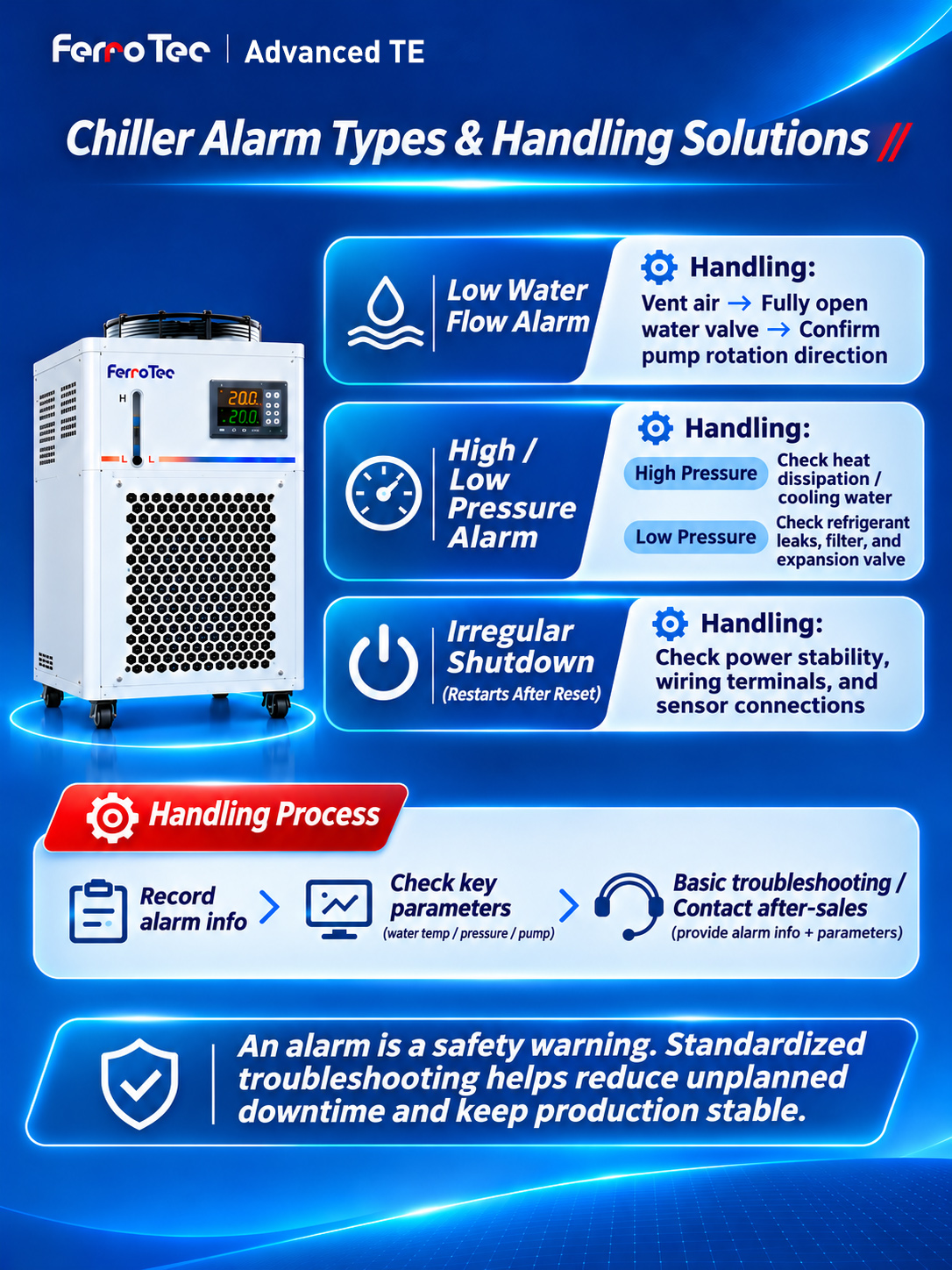
☑️ Low water flow alarm: Alarm triggers immediately on startup. Check whether air is fully purged from piping, whether valves are fully open, and whether the water pump rotation direction is reversed. If the alarm flashes briefly and resets automatically, it is usually a false signal caused by water hammer. Adding a 3–5 second signal delay filter in the control program can resolve this.
☑️ High / low pressure alarm:
For air-cooled chillers with high-pressure alarms, inspect dirty heat dissipation fins, insufficient cooling or low fan speed.
For water-cooled chillers with high-pressure alarms, check for insufficient cooling water flow or excessively high cooling water temperature.
For low-pressure alarms, first check for refrigerant leakage and clogged filters, then verify if the expansion valve opening is too small.
☑️ Random shutdowns that restart normally after reset:
Check for transient grid fluctuations and loose terminals. Then inspect temperature and pressure sensor wiring for poor contact, which causes signal drift and false alarms.
⚠️ Important warning: Always record alarm codes and check water temperature, pressure and pump status. Simple issues can be checked on-site. For complex faults, share the alarm information and operating parameters with after-sales support to speed up troubleshooting.
In short, chiller alarms are not just fault notifications — they are built-in safety early warnings. Understanding protection logic and following standardized troubleshooting helps reduce unplanned downtime and keeps chillers running steadily on production lines.
Reach out to us if you need support on chiller selection, thermal control design or fault handling.